Join our Official WhatsApp Channel
Get daily alerts on fully funded scholarships, remote jobs, and visa sponsorships before anyone else.
Free community. No paid links or spam.
Quick Intelligence
- 1
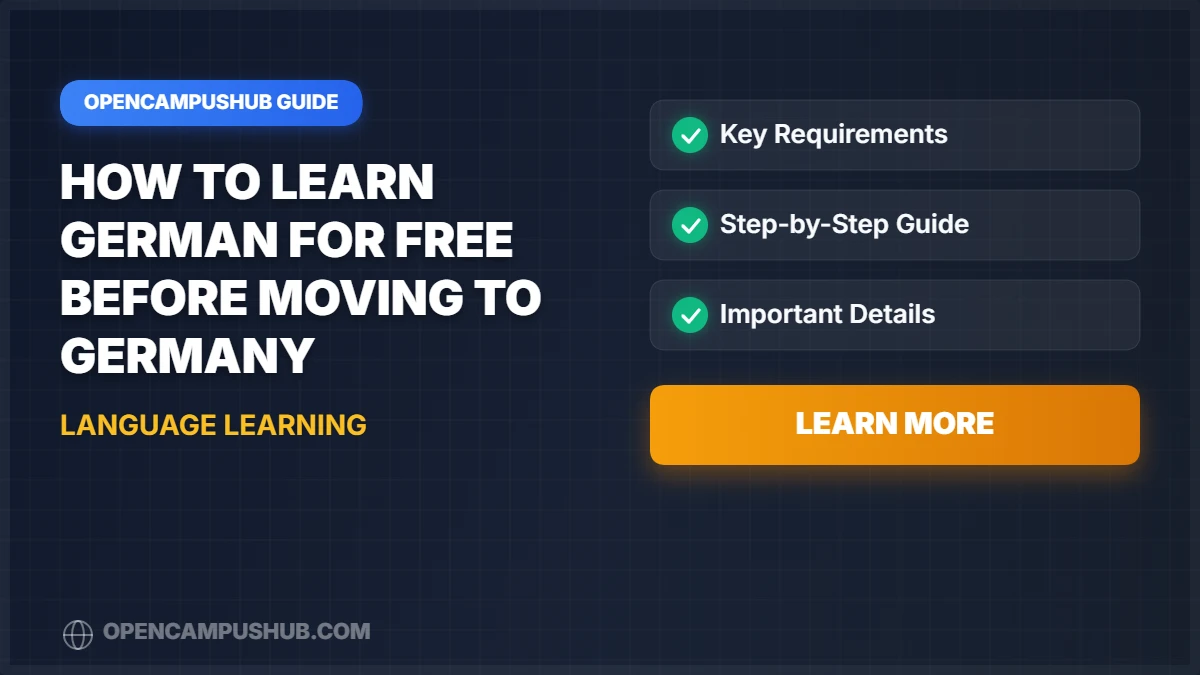
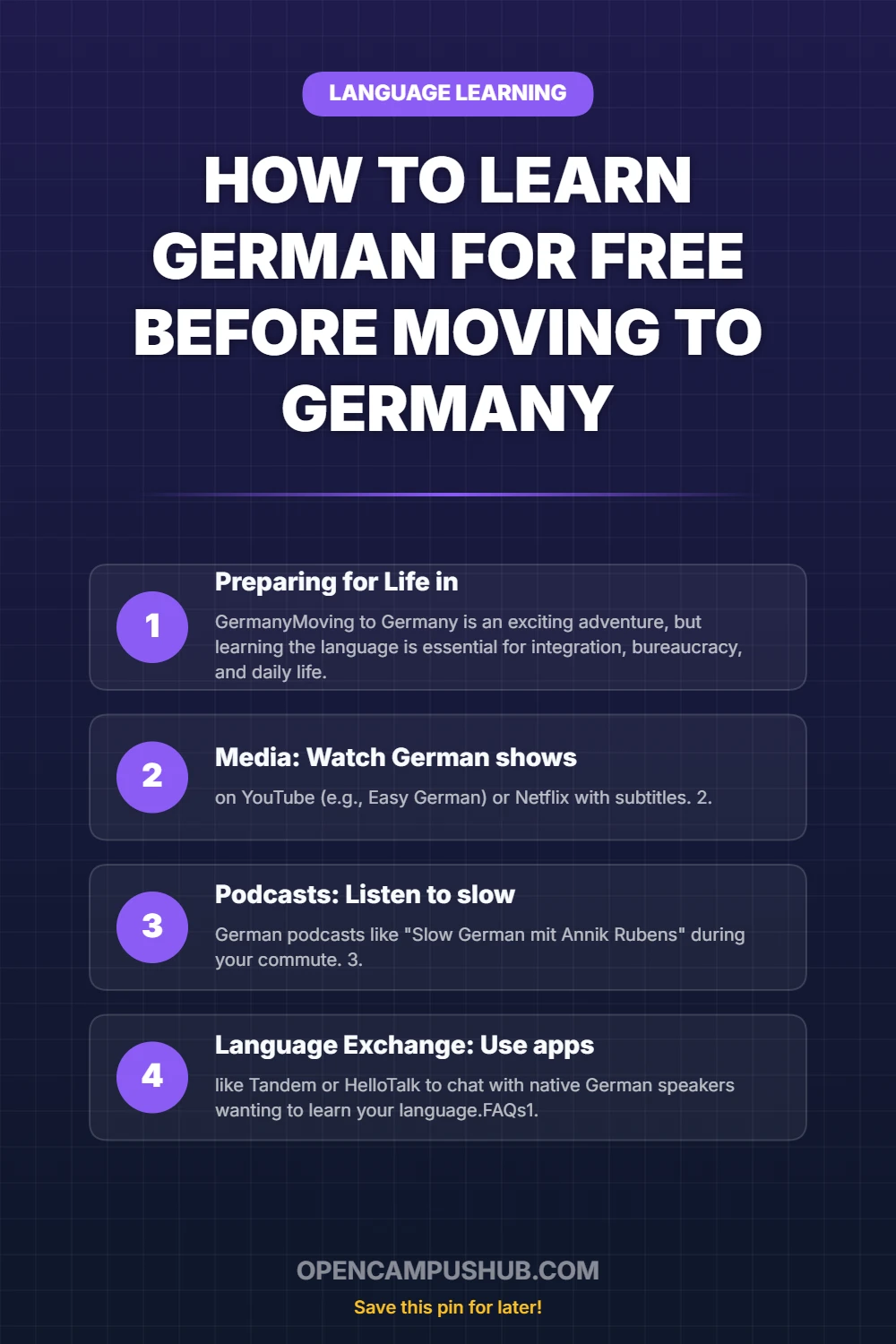
Preparing for Life in GermanyMoving to Germany is an exciting adventure, but learning the language is essential for integration, bureaucracy, and daily life.
- 2
Media: Watch German shows on YouTube (e.g., Easy German) or Netflix with subtitles. 2.
- 3
Podcasts: Listen to slow German podcasts like "Slow German mit Annik Rubens" during your commute. 3.
- 4
Language Exchange: Use apps like Tandem or HelloTalk to chat with native German speakers wanting to learn your language.FAQs1.
Preparing for Life in Germany
Moving to Germany is an exciting adventure, but learning the language is essential for integration, bureaucracy, and daily life. Fortunately, there are excellent free resources available to get you to an A2 or B1 level before you even arrive.
Top Free Resources
- Deutsche Welle (DW) Learn German: DW offers comprehensive, high-quality courses like "Nicos Weg." It provides video-based, interactive lessons covering A1 to B1 completely for free.
- VHS Lernportal: The German Adult Education Association offers excellent, federally funded online courses. They are highly structured and include tutor feedback.
- Language Apps: Apps like Duolingo, Memrise, and Anki (for flashcards) are great for vocabulary building and daily practice, though they shouldn't be your only resource.
Immersion Strategies at Home
To accelerate your learning, change your digital environment. 1. Media: Watch German shows on YouTube (e.g., Easy German) or Netflix with subtitles. 2. Podcasts: Listen to slow German podcasts like "Slow German mit Annik Rubens" during your commute. 3. Language Exchange: Use apps like Tandem or HelloTalk to chat with native German speakers wanting to learn your language.
Don't miss the next deadline!
Join our WhatsApp Channel for instant alerts.
FAQs
1. Can I survive in Germany with only English?
In major cities like Berlin or Munich, and within university campuses, you can get by with English. However, for contracts, government offices (Bürgeramt), and true integration, German is necessary.
2. How long does it take to reach B1 German?
With consistent, dedicated study (about 1-2 hours daily), most motivated learners can reach a B1 level in 6 to 9 months.
Written by the OpenCampusHub Editorial Team
Our global team of education and mobility experts is dedicated to verifying international opportunities. We ensure every guide meets strict standards for accuracy, leveraging official sources and real-world data.
Share this article
Discussion
Welcome to the discussion. Please keep questions relevant to the 2026 cycle. Our team aims to respond to critical inquiries within 48 hours.