Get Remote Job Alerts on WhatsApp
Be the first to apply! Join our channel for remote jobs, tech careers & visa sponsorship opportunities.
Free community. No paid links or spam.
Quick Intelligence
- 1
While Big Tech internships at Google or Microsoft are prestigious, they are also restricted by strict seasonal windows and low acceptance rates.
- 2
In 2026, the "Hidden Internship Market" has emerged through Micro-Internships and Virtual Experience Programs (VEPs).
- 3
Virtual Experience Programs (VEPs): Risk-Free PrestigeVEPs are simulated internships designed by top companies like J.P.
- 4
The Startup Direct-Hire LoopStartups in 2026 don't have "Internship Programs"—they have "Open Problems."Platform: Wellfound (AngelList).
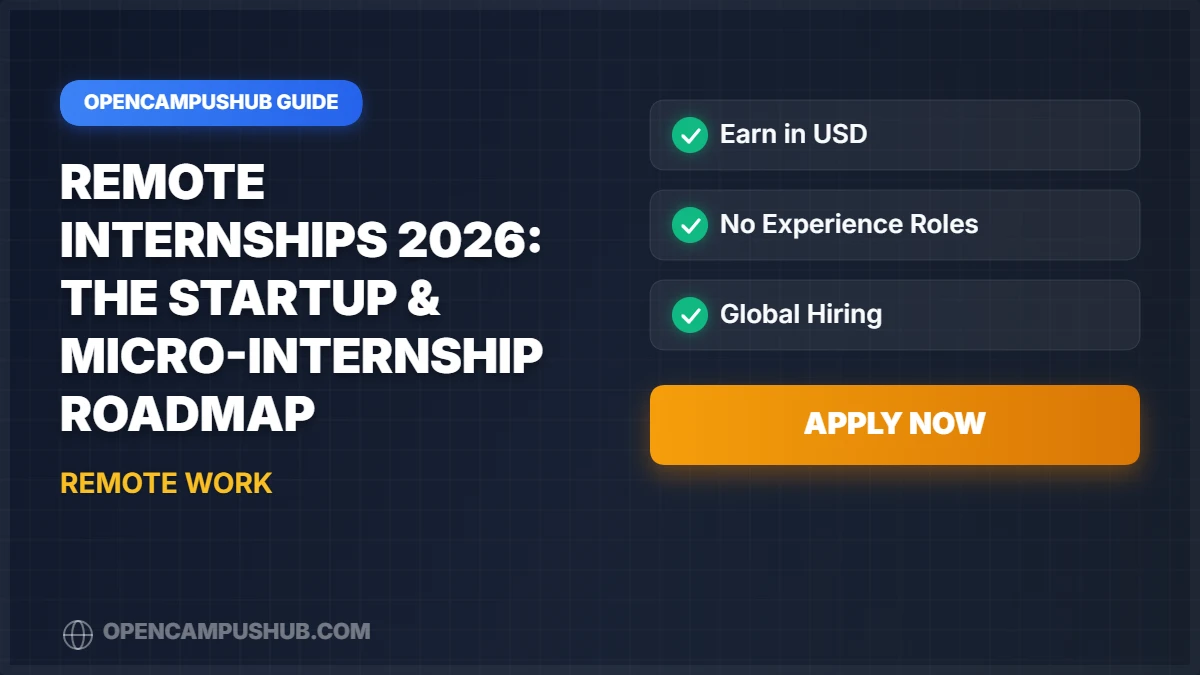
While Big Tech internships at Google or Microsoft are prestigious, they are also restricted by strict seasonal windows and low acceptance rates. In 2026, the "Hidden Internship Market" has emerged through Micro-Internships and Virtual Experience Programs (VEPs). These "other" remote internships are open year-round, often have no geographic restrictions, and provide the exact "Signal" US and European recruiters look for.
Table of Contents
This guide provides the 2026 blueprint to securing these high-impact, non-traditional roles.
1. Micro-Internships: The "Project-Based" Win
Micro-internships are short-term, paid professional assignments (usually 5 to 40 hours of work) that allow you to "audition" for a company.
Primary Platform: Parker Dewey. In 2026, this remains the gold standard for micro-roles at US startups.
The Benefit: You get paid in USD for a specific task (e.g., "Market Research for a Fintech Startup" or "Social Media Audit").
The Strategy: Successfully completing 3 micro-internships is often viewed more favorably by recruiters than one generic 3-month "shadowing" internship because it proves you can deliver results.
2. Virtual Experience Programs (VEPs): Risk-Free Prestige
VEPs are simulated internships designed by top companies like J.P. Morgan, Goldman Sachs, and Deloitte on platforms like Forage.
How it works: You complete a series of tasks that mirror a real day in the life of an analyst or engineer.
2026 Update: Many firms now use "Forage Completion" as a mandatory filter for their actual full-time interview invites.
The CV Hack: You can legally list these on your ATS-Friendly CV under "Professional Experience" or "Virtual Certifications."
Example: "Virtual Experience Program Participant – Software Engineering, Goldman Sachs (via Forage)."
3. The Startup Direct-Hire Loop
Startups in 2026 don't have "Internship Programs"—they have "Open Problems."
Platform: Wellfound (AngelList). Search for "Intern" or "Junior" roles and filter for "Remote."
Platform: Otta. Specifically focuses on high-growth tech startups that value agility over degrees.
The Strategy: Use the Cold Email Mastery Protocol to reach out to a Head of Growth or Engineering. Offer a "Two-Week Trial" internship. Startups value this "Permissionless" initiative.
4. Open Source & Community Internships
For those in tech, contributing to global codebases is the most high-fidelity internship possible.
MLH Fellowship: A 12-week remote program where you contribute to real-world Open Source projects while receiving a stipend.
Summer of Bitcoin / GSoC: Focused on blockchain and core software infrastructure. These roles are highly prestigious and pay in USD/BTC.
5. 2026 Preparation Checklist
The "Proof" Profile: Stop sending PDF resumes to startups. Send a Notion Portfolio showing 3 projects you have completed.
Communication Fidelity: Since these roles are remote, your ability to use Slack, Loom, and Notion is your "Right to Play." (See our Remote Skill Stack Guide).
The "Async" Advantage: In your application, emphasize that you are comfortable working in a different timezone and using asynchronous updates to stay aligned.
Conclusion
"Other" remote internships represent the fastest way to leapfrog the traditional career queue. By mastering the micro-internship model and completing 2-3 Virtual Experiences, you can build a 2026 profile that competes with the top 1% of global graduates.
Struggling to get accepted on Parker Dewey? Join our WhatsApp community for the "2026 Micro-Internship Proposal Template" and a list of 50 startups currently hiring virtual interns!
Don't miss the next job opening!
Join our WhatsApp Channel for instant remote job alerts.
Frequently Asked Questions
How can I find legitimate remote startup internships in 2026?
To secure a remote startup internship in 2026, focus on niche platforms like Wellfound (formerly AngelList), specialized internship job boards, and direct networking on LinkedIn. Startups often value proactive candidates; identify companies in your preferred sector, follow their founders, and reach out with a personalized pitch demonstrating how you can solve a specific problem for their team.
What are the benefits of choosing a micro-internship over a traditional internship?
Micro-internships offer short-term, project-based work that allows you to gain specialized skills and build a portfolio without the long-term commitment of a traditional program. For students and career changers, they provide a low-risk way to explore different industries, build professional relationships, and prove your value to potential employers in a real-world setting.
How do I stand out for a remote internship when I have no prior experience?
Even without professional experience, you can stand out by creating a robust digital portfolio that showcases personal projects, freelance work, or open-source contributions. Focus on mastering the remote collaboration tools frequently used by startups—such as Slack, Notion, and Asana—and emphasize your ability to work autonomously and communicate effectively in a virtual environment in your application.
Written by the OpenCampusHub Editorial Team
Our global team of education and mobility experts is dedicated to verifying international opportunities. We ensure every guide meets strict standards for accuracy, leveraging official sources and real-world data.
Share this article
Discussion
Welcome to the discussion. Please keep questions relevant to the 2026 cycle. Our team aims to respond to critical inquiries within 48 hours.